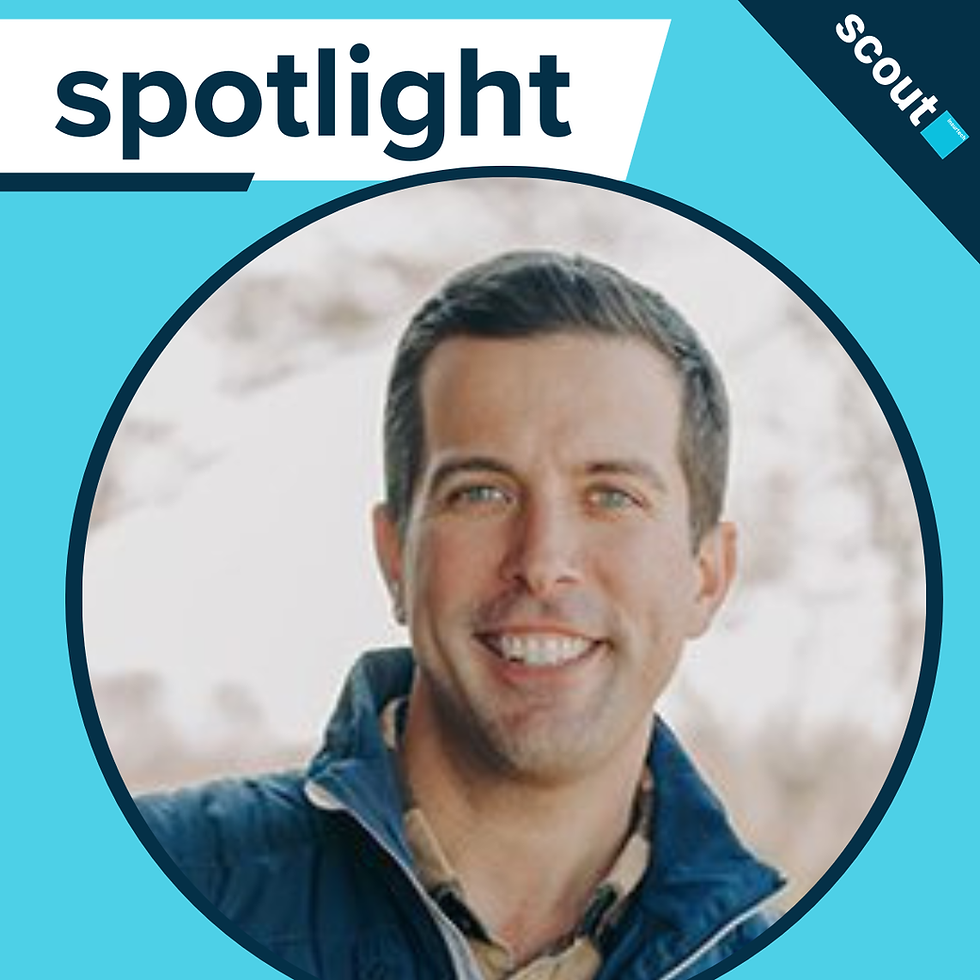
Scout InsurTech Interview with Jon DeWald

Jon DeWald is the CEO at HelixIntel where he focuses on transforming facility management with forward-thinking solutions. Jon was interviewed by Michael Fiedel, Founder and COO at PolicyFly and Co-Founder at Scout InsurTech.

Jon, with deferred maintenance now approaching a multi-trillion dollar issue tied directly to future claims, how should insurers be thinking about the true scale and urgency of this problem today?
“The magnitude of deferred maintenance and the scale to which it's growing is just breathtaking. In the US alone we need $9.1T to bring U.S. infrastructure to a state of good repair. When you look at just the public sector, K through 12 schools and municipalities, we're somewhere between one and two trillion dollars, and that's expected to hit four trillion by the end of the decade. So you have a compounding effect happening in real time.
What's certain is that deferred maintenance directly correlates to claims. This is a massive problem growing in the background, and every insurance company globally needs to recognize it and wrap their arms around it. But the good news is that for every dollar spent proactively, you typically get about four dollars back in avoided costs down the road. That's a well-known model, and there's a lot of ability to quantify the impacts of proactive risk management. Understanding the benefits of tackling this problem head-on is extremely well documented.”
Given how significant deferred maintenance is, what are the core structural reasons it persists, and what has historically made it difficult for maintenance teams, finance leaders, and insurers to interact today?
“There are a couple of core structural reasons. First, maintenance teams are stretched extremely thin. When you look at the number of maintenance professionals globally compared to the need, the shortage is astonishing. Roughly 50 to 60% of maintenance professionals are expected to retire in the next ten years, and there simply aren't enough people coming into the field behind them. The frontline workers doing the work to keep properties running efficiently and reduce risk are already overwhelmed.
On top of that, there's a massive knowledge transfer gap. People coming in don't have the resources or familiarity with existing problems, and with retirements happening so quickly, institutional knowledge isn't being passed on, which compounds the claims issue further.
And when it comes to the broken dynamic between maintenance teams, finance, and insurers, it really comes down to this: maintenance professionals have historically lacked the ability to effectively articulate their needs to business owners, finance leaders, and insurers in a way that gets funding requests approved. When they can't do that, problems get kicked down the road. Nine-point-one trillion dollars is the result of kicking things down the road. The inability to communicate effectively between these groups results in competing priorities rather than aligned ones.”
As insurers look beyond traditional risk transfer, how can they practically step into a role that connects maintenance teams with financial decision-makers and drives more proactive risk management?
“This is where insurance is, I think, perfectly designed to lead. Given their purely financial view into properties and risk, insurers can step into what we like to call a risk consultant role for the policyholder. That means telling maintenance teams what concerns they're seeing: here are the risks we're identifying, here's what we're seeing across properties like yours, here's the impact those risks are having, and here are the steps you can take to mitigate them. And critically, here are the resources available to you to take action.
When you do that, you give maintenance teams the ability to go to anyone who approves capital work or project planning and present ROI based on real risk reduction, something meaningful not only to the property but to the insurer as well. That transparency is transformational. It's one of the major shifts for the industry: finding every opportunity to be something more than just a policy document and to be a genuine advisor.”
If the industry successfully shifts from reactive fixes to preventative maintenance at scale, how does that change underwriting outcomes, property risk, and the broader environments people rely on every day?
“At the end of the day, the economic model gets better for everybody. Policyholders save money, invest in other areas, and operate better facilities. Insurance companies reduce claims, improve their loss ratios, and see better combined ratios. Underwriters gain flexibility and can be more competitive if they choose, while being better positioned to support the full ecosystem.
The deeper shift, though, is relational. Everyone in this ecosystem is connected, they've just never had the building blocks to pull together. What you're looking at is a future partnership built not on mistrust, but on trust developed over time. For the first time, insurers can say here's what we're concerned about, and properties can say we're trying to solve these same problems, and suddenly there are two parties working toward the same goal.
And that matters at a civilizational level. Deferred maintenance is going to be paid by somebody. Either it gets paid by policyholders at the most expensive possible moment, or it gets paid by insurers, and when you look at how quickly those dollar figures are growing, there aren't enough premiums being collected to cover the problem as it stands. Bringing this community together and collaborating to tackle it head-on isn't just good business. It's going to be transformational for everyone.”
Scout InsurTech Thanks Our Partners
 |  |
 |  |
 |  |