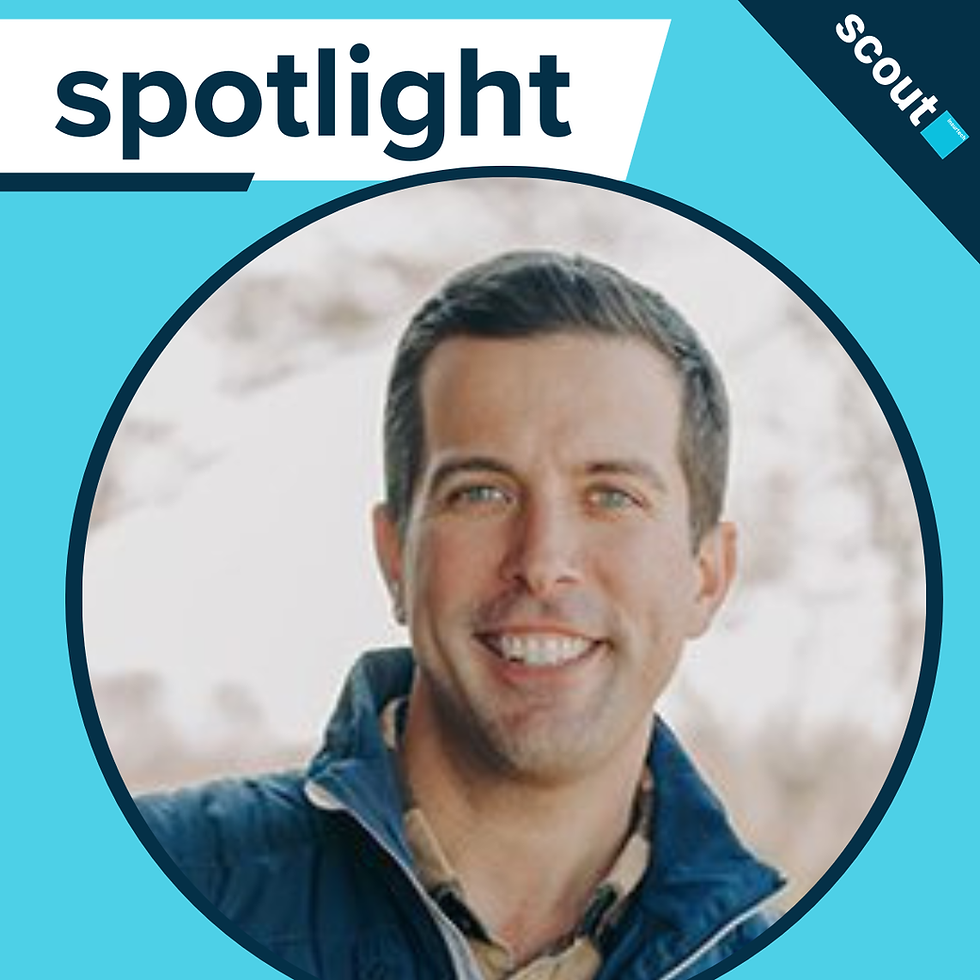
Scout InsurTech Interview with Kurt Morgan

Kurt Morgan is a longtime insurance executive with decades of underwriting and leadership experience. Michael Fiedel sat down with Kurt to discuss how insurers can better align underwriting discipline, culture and innovation to stay relevant in a changing market.

Kurt, at this stage of your career, what excites you most about the opportunity to make one more meaningful impact on the insurance industry, and where do you believe that impact is most needed today?
“What energizes me now is the chance to combine decades of experience, the traditional nuts and bolts of underwriting, with the rapidly advancing tools that help us predict future outcomes with far greater precision than we have ever had before. The biggest opportunity, and also the biggest gap I see today, is assessing the expected lifetime value of every prospective customer. With the data, analytics and actuarial science available to us, there is really no reason to pursue business that destroys value, yet we still see it happen far too often. I think the next major leap as an industry is ensuring that every transaction is grounded in a clear understanding of the value it creates or erodes over time.”
When you talk about building a risk-based culture rather than relying solely on traditional enterprise risk management, what does that shift look like in practice and why do so many organizations struggle to achieve it?
“I don’t want to discount the importance of identifying an organization’s top risks. Traditional ERM is vitally important, but I believe in building a risk-based culture. A true risk-based culture means everyone, not just the senior team or the ERM function, is thinking in terms of risk versus reward. It requires empowering all employees, especially those on the front lines, with simple ways to surface risks, register them and bring them to the attention of supervisors. The same goes for opportunities. People must be recognized for that effort. That recognition can be simple, but it matters. Organizations struggle with this because the benefits are not always immediately visible. However, in my experience, the payoff is enormous. If leaders spend time with frontline teams, they will uncover risks they never would have spotted themselves. The insights are there. You just need a culture that invites them.”
How should insurers empower frontline employees to identify and act on risks and opportunities in ways that align with long-term strategy and value creation?
“I would start by involving a diverse cross-section of employees in the long-term planning process itself. Diversity of thought is what you’re shooting for, so choose team members with diverse backgrounds in terms of where they grew up, where they went to school, years of experience, the functional areas they come from, etc. Get as broad a group as you can and involve them in shaping the mission, vision and values. When people help define those things, they naturally become better stewards of the long-term direction. Once the strategy is in place, it has to be communicated relentlessly, internally and externally. When employees understand where the organization is going and why, they are far more likely to identify risks and opportunities that support that long-term vision.”
As newer, more agile insurance organizations emerge, what can established carriers learn from them and what mindset changes are necessary to remain competitive over the long term?
“Established carriers are learning every day, sometimes the hard way, how dangerous the phrase “That’s the way we’ve always done it” can be. Past success does not guarantee future relevance, and long-held assumptions need constant reevaluation. To stay competitive, carriers should embrace continuous innovation and create environments where challenging the status quo is not only accepted but encouraged. Agility is not just about speed. It is about maintaining a mindset that welcomes new ideas and never treats current practices as untouchable.”
Scout InsurTech Thanks Our Partners
 |  |
 |  |
 |  |