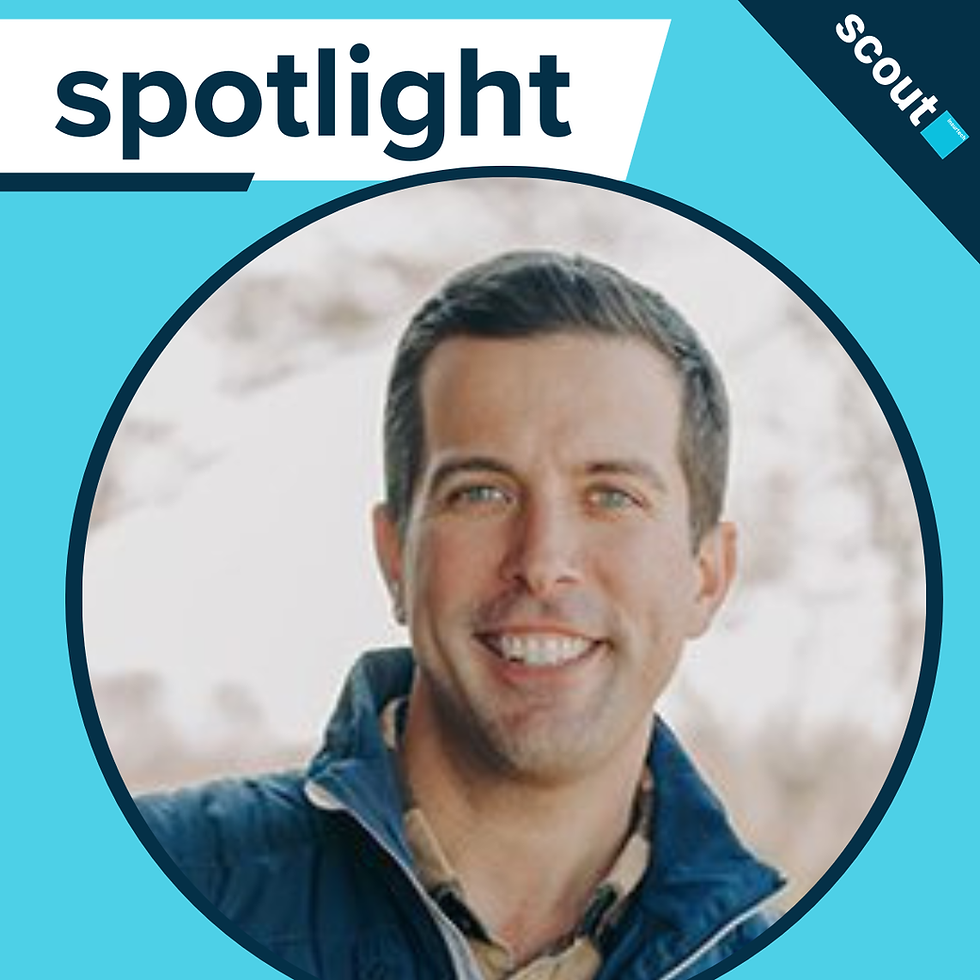
Scout InsurTech Interview with Aditya Achar and Jeff Hunt

Jeff Hunt is Senior Vice President of Transportation and Senior Claims Advisor at Alliant Insurance Services, where he handles claims and legal matters and oversees the company's claims advocacy team. Jeff was interviewed by Aditya Achar, Account Manager at E.O.X. Vantage. EOX Vantage helps insurance organizations streamline operations with platform solutions, automation, and managed services, and is a partner of Alliant.
Jeff, can you walk us through your exposure to fleet insurance?
"My exposure to fleet insurance is pretty broad. I am an attorney by background. I started out practicing law before joining an insurance company. There, I oversaw claims litigation and claims management across multiple lines of insurance. I eventually transitioned from Director of Claims into a Vice President of Programs role, where I oversaw a number of specialized insurance programs designed for specific groups within the transportation sector.
Those programs covered a wide range of transportation operations, from large fleet operators to final-mile delivery and courier businesses. Transportation is a very diverse sector. It is not just large trucks on the highway. It also includes step vans, delivery vehicles, and a variety of other fleet types that operate in different segments of the industry."
How does Alliant use analytics across the fleet lifecycle, underwriting, pricing, claims, and risk management?
"Telematics technology has advanced tremendously over the past 15 to 20 years, and that has opened the door for much deeper analytics. At Alliant, we partner with our clients to ingest telematics data from their vehicles and devices into our platforms so we can see what is happening out in the field.
We use that information across several parts of the fleet lifecycle. From a safety and risk management perspective, it helps identify behaviors and patterns that can lead to incidents. From an underwriting and pricing perspective, we can combine that operational data with loss history and fleet scoring to create a more complete picture of the risk.
The goal is to help our clients tell a clearer story in the marketplace. Instead of relying only on historical losses, we can demonstrate what is actually happening operationally and what steps the fleet is taking to improve safety and efficiency. That helps reduce some of the guesswork. When underwriters have better data and better context, it becomes easier to assess risk and make informed decisions about pricing and coverage.
Predictive analytics also allows us to look at historical patterns and develop a reasonable expectation of what the upcoming policy period might look like."
What inputs or signals matter most in Alliant’s predictive approach to fleet risk?
"There are several driver behavior signals that are especially important. We look closely at things like speeding, hard braking, collision detection, cornering behavior, and tailgating. Compliance with traffic controls is another key signal. That includes whether drivers are stopping fully at stop signs, complying with red lights, and following posted speed limits.
The technology behind these insights has come a long way. Earlier telematics systems were fairly limited in what they could detect. Today’s devices often include AI capabilities that allow them to recognize road signs, monitor driver behavior, and capture a much more detailed picture of what is happening during a trip.
These signals help safety directors and underwriters understand how a fleet is operating in real time. They also help fleets identify where corrective actions may be needed, whether that involves driver coaching, operational changes, or improvements in route planning."
How does Alliant use telematics and IoT data, and what decisions does it actually change for fleets?
"Telematics and IoT data provide visibility that fleets simply did not have before. Once that data is normalized and analyzed, it can influence several operational decisions.
One example is route planning. A route between two points might look efficient on paper, but the telematics data may show that a particular stretch of road consistently produces incidents because of congestion or traffic patterns. In that case, fleets may decide to adjust the route slightly. Even if the new route is a mile or two longer, avoiding a high-risk area can significantly reduce accidents over the course of a year.
Those kinds of changes can lead to fewer vehicle repairs, less downtime, and a lower administrative burden for safety teams. Over time, these insights contribute to a safer and more efficient fleet operation. They also help fleets demonstrate improvement to underwriters, which can support better insurance outcomes."
What safeguards matter most when handling policyholder and vehicle-level data in connected fleets?
"Privacy and transparency are extremely important when working with this type of data. At the fleet level, it is critical that everyone understands what data is being collected and how it will be used. Proper consent for the use of that data is essential.
The data we analyze is typically shared internally within agreed parameters, and it is done at the election of the insured. Fleets ultimately decide whether and how their data is shared. Our responsibility is to protect that information and make sure it is used in a way that benefits the client, whether that means improving safety, supporting underwriting discussions, or helping with operational decisions."
What trends are you watching, and how do you expect analytics to evolve alongside them?
"The pace of technological advancement is one of the biggest trends to watch. I attend several conferences where telematics providers showcase new products and improvements to existing systems, and the capabilities continue to expand.
Artificial intelligence is becoming a major component of many of these solutions. AI is being used to process operational data, automate documentation, and identify safety risks more quickly. Sensor technology is also improving. For example, in construction and heavy equipment environments, AI-driven sensors can now detect when a person or object is behind a vehicle and alert the operator, which helps prevent serious accidents.
More broadly, the combination of telematics, sensors, and AI is creating opportunities for fleets to operate with greater awareness and control. When you step back and look at how far technology has come, it is pretty remarkable. I grew up in the Atari era, and the technology we have today would have seemed unimaginable back then. Seeing how quickly these tools are evolving and how they are improving safety and efficiency across industries is truly impressive."
Scout InsurTech Thanks Our Partners
 |  |
 |  |
 |  |
 |  |