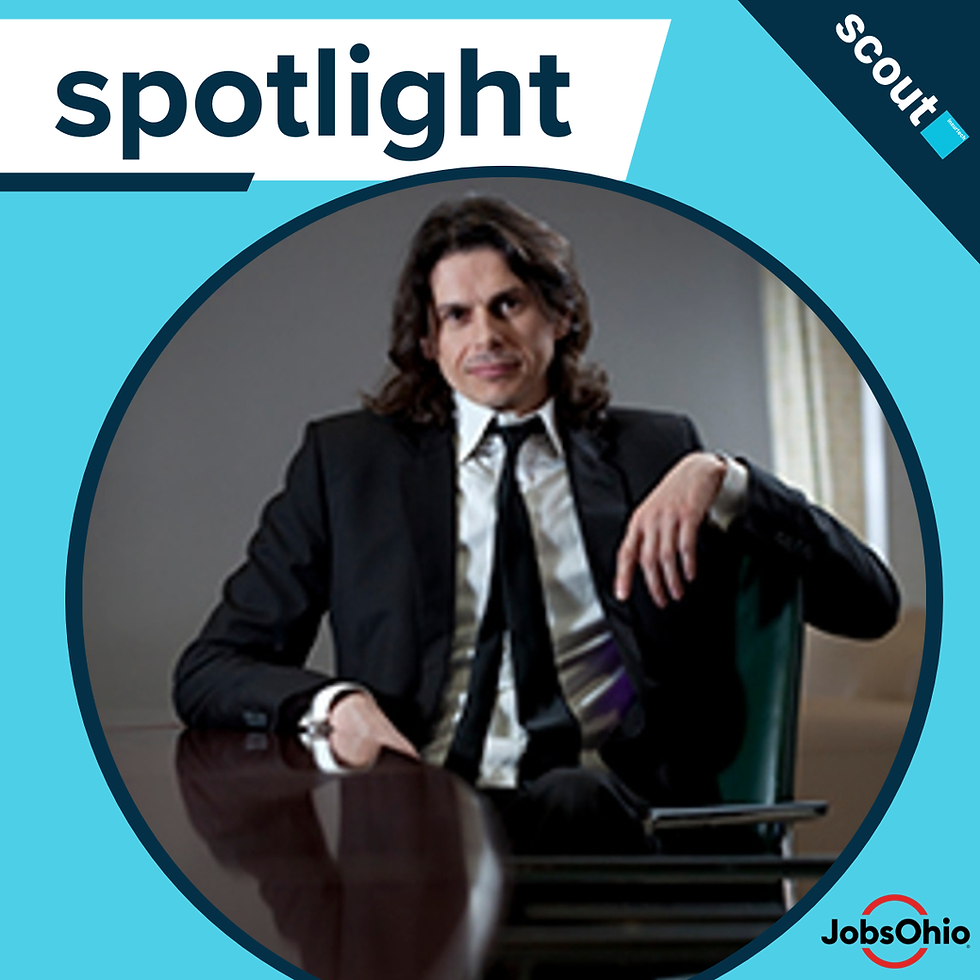
Scout InsurTech Spotlight with Alex Fuentes

Alex Fuentes is the EVP, Strategic Growth at Brickeye, a global leader in Construction IoT and job site risk mitigation technology services. Brickeye enables owner/developers, contractors, and insurers to mitigate water damage and concrete-related losses, reduce insurance costs, and drive better outcomes through real-time IoT monitoring, automated risk controls, and actionable insights. Alex was interviewed by Andrew Daniels, Co-Founder at Scout InsurTech and Co-Founder and President at CrashBay.

Alex, you have built your career around helping industries apply technology in new ways. What drew you to focus on construction risk, and how has that journey shaped your perspective on the challenges the industry faces today?
“I have always been drawn to tough problems. They create opportunities to deliver meaningful value and shape how industries operate. Construction and insurance both historically rely heavily on experience and established practices, and construction has been one of the last major sectors to undergo a full digital shift.
The pace of technology adoption is now accelerating, and the opportunity to improve risk mitigation is tremendous. But this journey has shown me just how complex the ecosystem is. Improving risk management is not just about deploying technology. It is about aligning incentives between owner/developers, contractors, and insurers, and connecting relevant data and insights across those stakeholders to drive better decisions.”
Builder’s risk claims are dominated by water damage, yet the industry response has often been to simply raise premiums and deductibles. From your perspective, how can technology shift the conversation from pricing risk to actually mitigating it?
“Technology gives the industry a proactive path instead of a reactive one. Data from industry studies shows IoT monitoring and risk controls can reduce water damage exposure by up to 90 percent on job sites. That fundamentally changes the dynamic.
Premiums and deductibles are locked in when coverage is placed, so owner/developers and contractors need to demonstrate upfront that they are proactively de-risking projects through tech adoption. When that happens, and when it is communicated effectively through brokers, you break the cycle of rising claims driving rising costs.”
You have talked about the gap between underwriters and risk managers, with underwriters often unaware of whether technology is even in use on a project. What needs to change in the underwriting process to bring more visibility and certainty around technology adoption?
“It starts with breaking down silos. Underwriters need visibility and certainty, early in the process, around what risk control technology will be deployed.
That is why we launched BuildersRiskIQ, an IoT-enabled dashboard that provides visibility into a project’s risk control protections before coverage is quoted and bound. It allows risk managers, brokers, and underwriters to easily visualize and verify IoT risk control plans and align expectations around loss mitigation. It is backed by a Brickeye Certificate of Protection.
The result is that we are already seeing clients reduce deductibles and even secure premium credits by demonstrating proactive mitigation through tech adoption.”
IoT has matured to the point where it is cost effective and widely available. What does it take to convince stakeholders such as developers, contractors, and insurers that the value of risk reducing technology outweighs the upfront investment?
“The key is helping stakeholders understand the full financial and operational impact of water damage. When you look at the real costs of an incident, it goes far beyond rework. You see schedule delays, construction loan carry costs, lost revenue, potential litigation, and real reputational consequences. Anyone who has lived through a water event quickly realizes that mitigation technology pays for itself many times over.
We also see a clear insurance benefit. By reducing the frequency and severity of incidents and demonstrating proactive risk management, our clients are lowering deductibles, reducing claims, and in some cases even securing premium credits. Insurers want to work with clients that are managing risk, proactively and in real-time, and technology allows them to see that in practice.
Finally, there is a competitive angle. Owner/developers want to protect margins, contractors want to win bids, and insurers want stronger loss ratios. Consistently mitigating losses builds trust and positions companies as leaders in construction quality and risk management excellence. At this point, adopting technology is not just a prudent measure, it is a way to stand out in the market and drive differentiated project outcomes.”
Looking ahead, where do you see the biggest untapped opportunities for technology across the lifecycle of a project, from pre construction to active build to post construction?
“We are still only in the early innings of what connected technology and AI can do for construction risk. In the pre construction phase, data and AI tools will help project teams better understand exposure, scope the right technology strategy, and make smarter decisions before work ever begins.
During construction, continuous IoT monitoring and automated controls offer huge potential. Real-time insights into environmental conditions, building systems, safety considerations, and even structural health can help teams respond instantly to emerging issues rather than waiting for a loss event. That shift from reactive response to real-time mitigation is where the industry starts to see transformational value.
And once a building is complete, the data does not stop being useful. Information captured during construction can inform asset management decisions, future project planning, and a more predictive approach to risk on the next job. Over time, the real opportunity lies in creating a continuous loop where insights from every phase feed into the next, improving quality, safety, and financial performance across the entire lifecycle of the built environment.”
Scout InsurTech Thanks Our Partners
 |  |
 |  |
 |  |
 |  |